2013년 3월 19일 화요일

U.K. #5

Taxation in the U.K. involves payments to a minimun of two different levels of government: the central government and local government.
The central government revenues come primarily from income tax, national insurance contributions, value added tax, corporation tax and fuel duty.
The local government revenues come from grants from central government funds, business rates in England, Council Tax, and from fees and charges such as those from on-street parking.

Most of the developments in UK taxation have been in line with following things.
  1. the share of revenue provided by VAT has greatly increased, while the share provided by taxes on specific goods has fallen by a similar amount.
  2. basic and higher rates of income tax have been cut.
  3. new environmental taxes have been introduced.
But there are some unusual things.
  1. the UK applies a zero rate of VAT to many more goods than most other countries.
  2. an unusually small share of UK tax revenue comes from social security contributions but an unusually large share comes from recurrent tax on buildings( council tax and business rates).

A Land Tax was introduced in U.K. in the late 17th century. This was the main source of government revenue throughout the 17th, 18th, and 19th century. 
And income tax was introduced by William Pitt the Younger in 1799, to pay for weapons and equipment in the preparation for the Napoleonic Wars. Income tax was levied under five schedules: Schedule A- tax on income from U.K. land
Schedule B-tax on commercial occupation of land
Schedule C-tax on income from public securities
Schedule D-tax on trading income, professions, vocations, overseas income
Scheduel E- tax on employment income

But Pitt's income tax was abolished by Henry Addington during the Peace of Amiens.
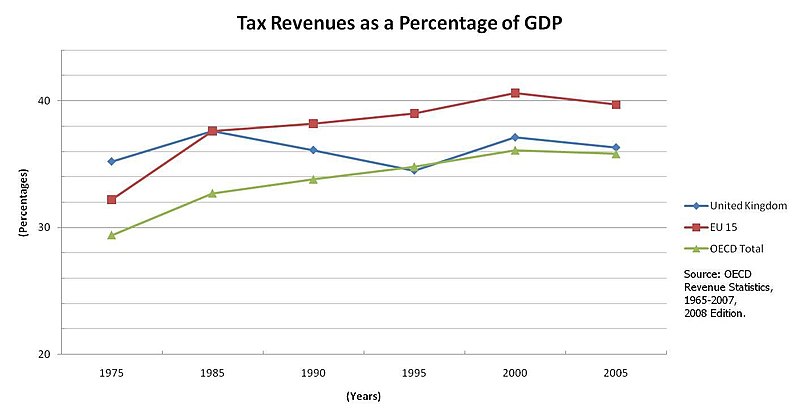

File:U.K.-Tax-Revenues-As-GDP-Percentage-(75-05).jpg


http://www.hmrc.gov.uk/rates/it.htm
http://www.ifs.org.uk/mirrleesreview/dimensions/ch1.pdf

2013년 3월 5일 화요일

U.K. # 4

U.K. is based on constitutional monarchy, which is can be broken down into three parts: the sovereign, the upper chamber/house, and the lower chamber/house. Her Majesty's Government is the central government of the U.K. The government is led by the Prime Minister, David Cameron, who was appointed by Queen Elizabeth II.
There are 4 main problems that U.K. is facing: decline in GDP, rise in unemployment, bank lending, and rise in government borrowing.
Since the recession started, UK GDP declined about 3.8% since 2009, which makes the recession very deep.
Unemployment also rose from 2 mil. in 2009 to 3.mil. in 2010. Unemployment is the biggest cause of poverty in the UK.
Due to global credit constraints, bank have cut back on lending to firms, households and for mortgages. It has effected investment and demand for housing.
The 2009 recession caused a rapid rise in the government borrowing. Public sector debt has risen to 47% of GDP and rose nearly 60% of GDP at the end of the recession. Higher government borrowing caused the weaker Pound and raised the prospect of future tax rises.
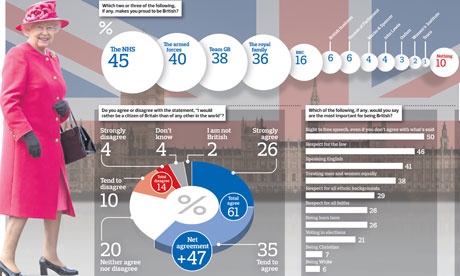
One interesting fact is that immigration is regarded as the biggest issue facing British society. Over the past two decades, both immigration and emigration increased, with those entering the country exceeding those leaving by more than 100,000 in every year.


British Future poll graphic


http://www.state.gov/r/pa/ei/bgn/3846.htm
http://www.guardian.co.uk/uk/2013/jan/13/immigration-british-society-biggest-problem
http://notayesmanseconomics.wordpress.com/2010/05/12/the-economic-issues-facing-the-new-uk-government/
http://www.economicshelp.org/blog/1426/economics/main-problems-in-uk-economy/


2013년 2월 18일 월요일

U.K. #3


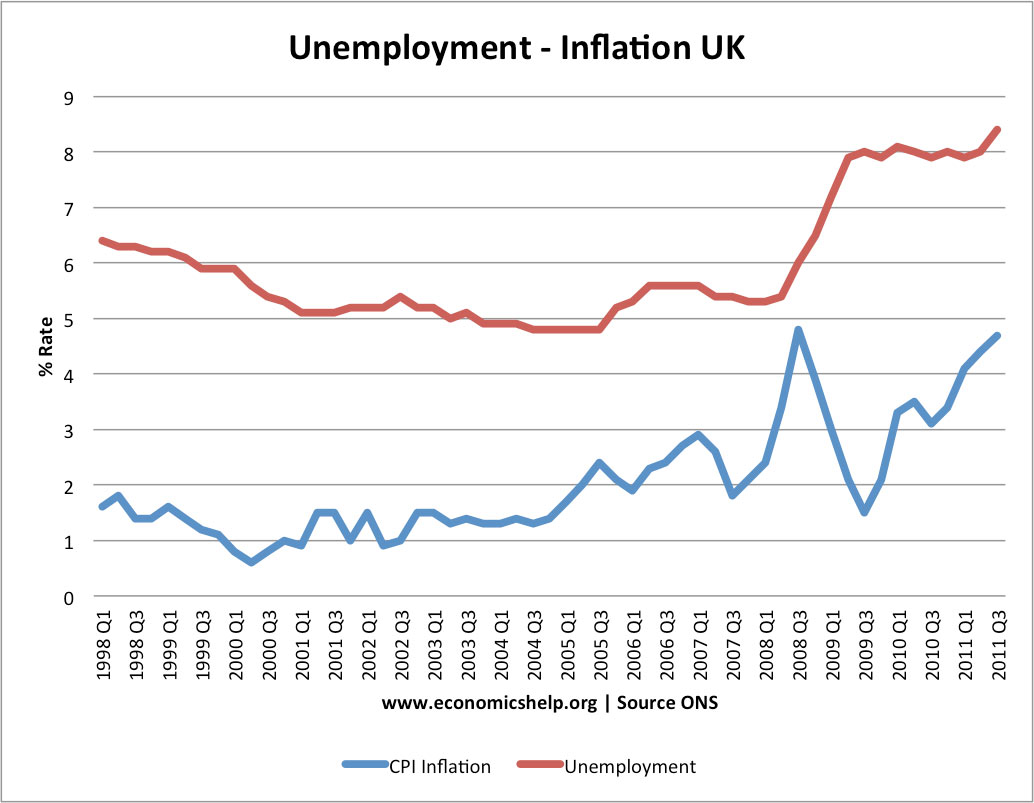
inflation

Unemployment in U.K. in mid-january of 2012 was about 8.3%, 2.67 million people. And 1.3million people were underemployed, meaning that they were in part-time work but unable to find full-time work. 
The graph above shows the drastic change in unemployment rate in 2008 and since then, the unemployment rate remained high, about 8%. Also, the CPI inflation rate was the highest at 2008, reaching nearly 5%. After than, the inflation rate is changing drastically, going down to 1.5% in 2009, and increasing since then. 
There are few causes of inflation. Inflation is caused when there is too much money in circulation, when there is more demand for goods than can be met by the available supply, and when the workers' wages, raw material prices, and import prices increase.


http://www.economicshelp.org/blog/1622/inflation/inflation-rates-in-uk/
http://whatisinflation.uk.com/

2013년 2월 4일 월요일

U.K. #2


The rate of CPI inflation rose to 2.7% in October of 2012, up from 2.2% the month bebefore.
CPI 2012

CPI long-term

The inflation rate of U.K. was about 2.7% in December of 2012. Historically, from 1989 to 2012, the U.K.  inflation rate averaged 2.81%, reaching an all time high of 8.5% in April of 1991 and a record low of .5% in May of 2000.

There are few opinions on what causes the inflation. Some view that inflation is caused when there is too much money in circulation. Some say that the inflation is purely caused by more demand for goods than can be met by the available supply. And the last cause can be number of factors, including increases in workers’ wages, increase in raw material prices, and increase in import prices.


2013년 1월 19일 토요일

U.K.

United Kingdom of Great Britain is a highly industrialized economy. Its GDP is about 2.432 trillion USD. The England's GDP per capita is the 22nd highest in the world and also 22nd highest measured by PPP.

The U.K. is the 7th leading importer and the 11th leading exporter in the world. U.K. 's most common exports include nuclear reactors, mineral fuels, cars, electrical machinery, gemstones, and precious metal. Its major export partners are U.S., Germany, Netherlands, and few other European countries. Imports in 2009 was 473.6 billion USD, in contrast to 639.3 billion USD. U.K. was the 7th country in the world in terms of import. U.K.'s most common imports are machinery, fuels, apparel, foodstuffs, and electronics.


http://www.google.com/publicdata/explore?ds=d5bncppjof8f9_&met_y=ny_gdp_mktp_cd&idim=country:GBR&dl=en&hl=en&q=uk%20gdp
http://www.economywatch.com/world_economy/united-kingdom/export-import.html

2012년 11월 26일 월요일

Econ - 3

After the financial crisis at 2007, Mexico's economy was unstable. It suffered the steepest recession, and in 2009, tis economy shrank by 6%. And since China joined the World Trade Organization, in 2001, Mexico started undercutting its export price. Since then, 2001, Mexico's economy grew only by 1.6% a year, less than half the rate of Brazil, which flourished by exporting goods to China.

But now, according to The Economist, the story is different. "Mexico now boasts free-trade deals with 44 other countries, more than any other nation. Its financial sector and even its oil and gas fields, that augur well for a very different decade".  And according to US Department of Commerce HSBC, in six years' time the United States will be more dependent on imports from Mexico than any other country (a graph below projects the US imports from selected countries in the future).


Mexico has been one of the world's biggest oil producers. And Pemex, a state-run oil and gas monopoly, is at the top of the game. In few decades, Pemex could be a oil and gas monopoly of the whole world. If it really happens, then the demand would go up and supply would go down, which results higher price for consumers.

The Economist says, one way to stop Mexico's ongoing growth is "a protracted slowdown in the U.S., the destination of four-fifths of Mexico's exports". 


2012년 11월 6일 화요일

Econ - 2

As one's income increases, the one's demand for Folgers coffee would decrease, since Folgers coffee is an inferior good. Instead, the one would look for high quality-coffe, such as Luwak or Kona Pure coffee.
The demand for Starbucks coffee would be higher than the demand for Folgers coffee. But it really depends on one's personal taste. My parents are totally addicted to coffee. They usually don't go to coffee shop. Instead, they brew coffee at home. And yes, we do have coffee bean roaster and brewer, and all sorts of coffee beans. So, these freshly-brewed coffee and Starbucks coffees are normal good.